
Sourdough vs. regular bread: what are the benefits?
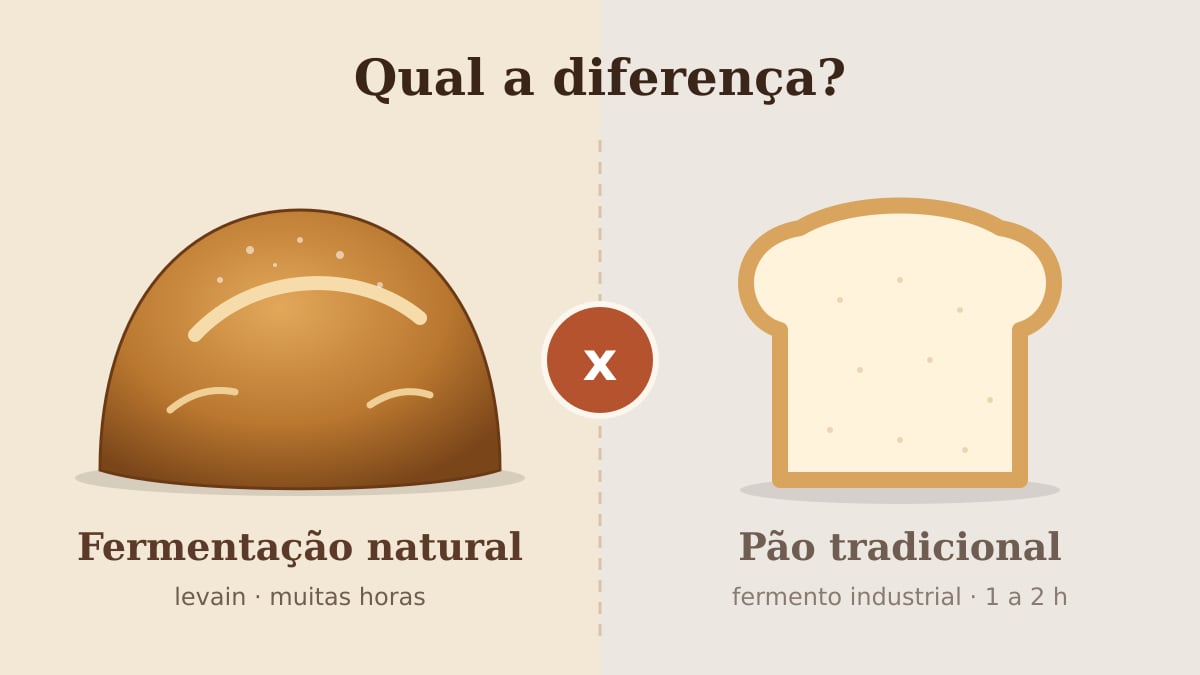
Many people notice the difference with the very first bite, but the benefits of sourdough bread go beyond flavor.
Benefits of eating sourdough bread
- Lighter digestion: during the long fermentation, the bacteria in the levain break down part of the starch and gluten. That’s why many people feel less bloated.
- Better use of nutrients: the natural acidity of the dough reduces the phytic acid in flour, which helps the body absorb minerals such as iron, zinc and magnesium.
- Lower glycemic impact: slow fermentation tends to make bread release sugar into the bloodstream more gradually.
- Simple ingredients: no dough improvers, additives or artificial preservatives.
- Stays fresh longer: the natural acidity helps the bread keep fresh for longer, without preservatives.
- More flavor: a distinctive aroma, crunchy crust and moist crumb.
Comparison
| Natural fermentation (levain) | Regular bread | |
|---|---|---|
| Leavening | Levain: a living culture of flour and water | Commercial yeast |
| Fermentation time | Many hours | Usually 1 to 2 hours |
| Ingredients | Simple, no additives | Often with improvers and preservatives |
| Flavor and texture | Complex, slightly tangy, crunchy crust | More neutral, more uniform crumb |
| Shelf life | Longer, thanks to natural acidity | Shorter without preservatives |
| Digestion | Tends to be lighter | Short fermentation breaks down less gluten and starch |
Important: sourdough bread contains gluten and is not suitable for people with celiac disease. If you have dietary restrictions, please consult a health professional.